The expertise of our accounting, finance, and transaction advisory professionals ensures that our Quality of Earnings reports go beyond the traditional assessment of historical performance and achievability of projections.
What are Quality of Earnings Studies?
Quality of Earnings studies can include:
- Normalized historical and forecasted EBITDA
- Description of the differences between EBITDA and cash flow
- Detailed customer and product analysis
- Analysis of nonrecurring revenue and expenses
- Working capital analysis
- Detailed review of related party transactions
- Analysis of key reserves and allowances
- Review of any contingent or off-balance sheet liabilities or assets
- Special circumstances related to the individual company or transaction
Who Needs Quality of Earnings Reports?
Buyers who are:
- Looking to gain a deeper understanding of the financial situation of target acquisitions
- Looking to acquire closely held businesses
- Acquiring businesses for a new product or service line not previously offered
- Seeking a bank loan to finance transactions; banks require due diligence reports for their loan files
Sellers who are:
- Seeking to facilitate and streamline transactions
- Looking to understand and explain any areas that may be of concern to buyers in a future transaction
How to Focus on “Quality” in Quality of Earnings Reports
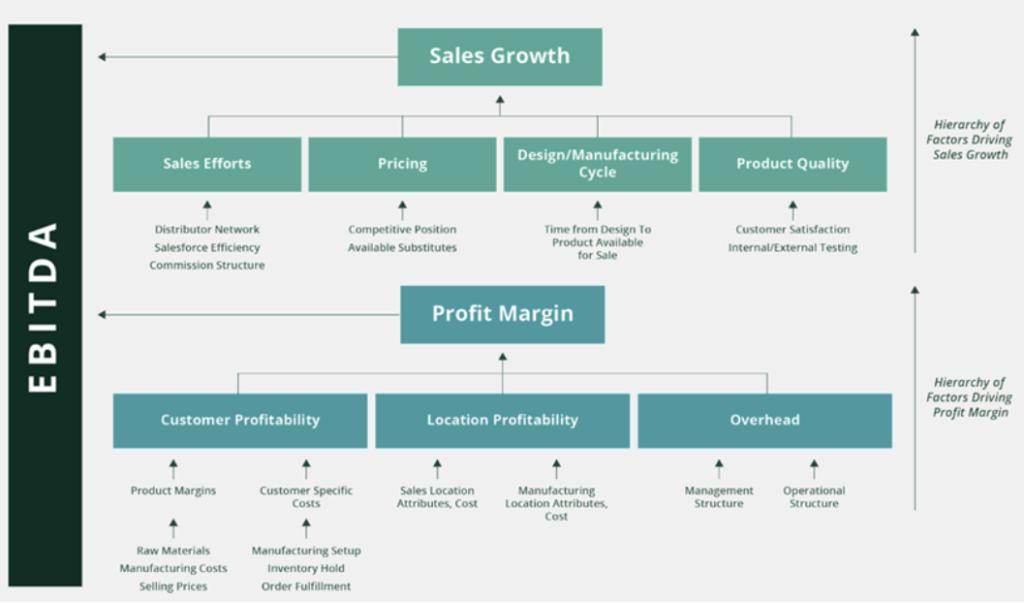
Quality Issue #1: What Drives EBITDA?
Examine the key value drivers of sales growth and profit margins to determine what really drives and impedes EBITDA. Understanding these and any other value drivers requires an in-depth analysis of their contributing elements. This can be illustrated using a generic products company.
Quality Issue #2: Test the Business Plan Assumptions
Test the earnings sensitivity to changes in operating and financial parameters. Testing needs to reflect:
- Key metrics that drive growth and profitability
- Cyclicality of sale and inventory buildup
- Customer and/or vendor concentration
- Working capital needs
- Capital requirements
- Tax assumptions
- Returns to shareholders
Quality Issue #3: Balance Sheet Review for Potential Effects on Profits
Review the balance sheet for anything relevant in understanding the company’s past and future performance. Such as:
- Atypical working capital
- Inventory turn and obsolescence
- Receivables issues
- Vendor payables and accruals
Quality Issue #4: Funding Capacity, Leverage, and Financial Structure
Review the business’ funding capital structure, return on debt and equity, and income taxes. The following areas must be examined:
- Cash reserves and borrowing facilities
- Borrowing costs
- Debt service and covenants
- Cyclical funding needs
- Financial leverage risk
- Taxation
- Returns to shareholders